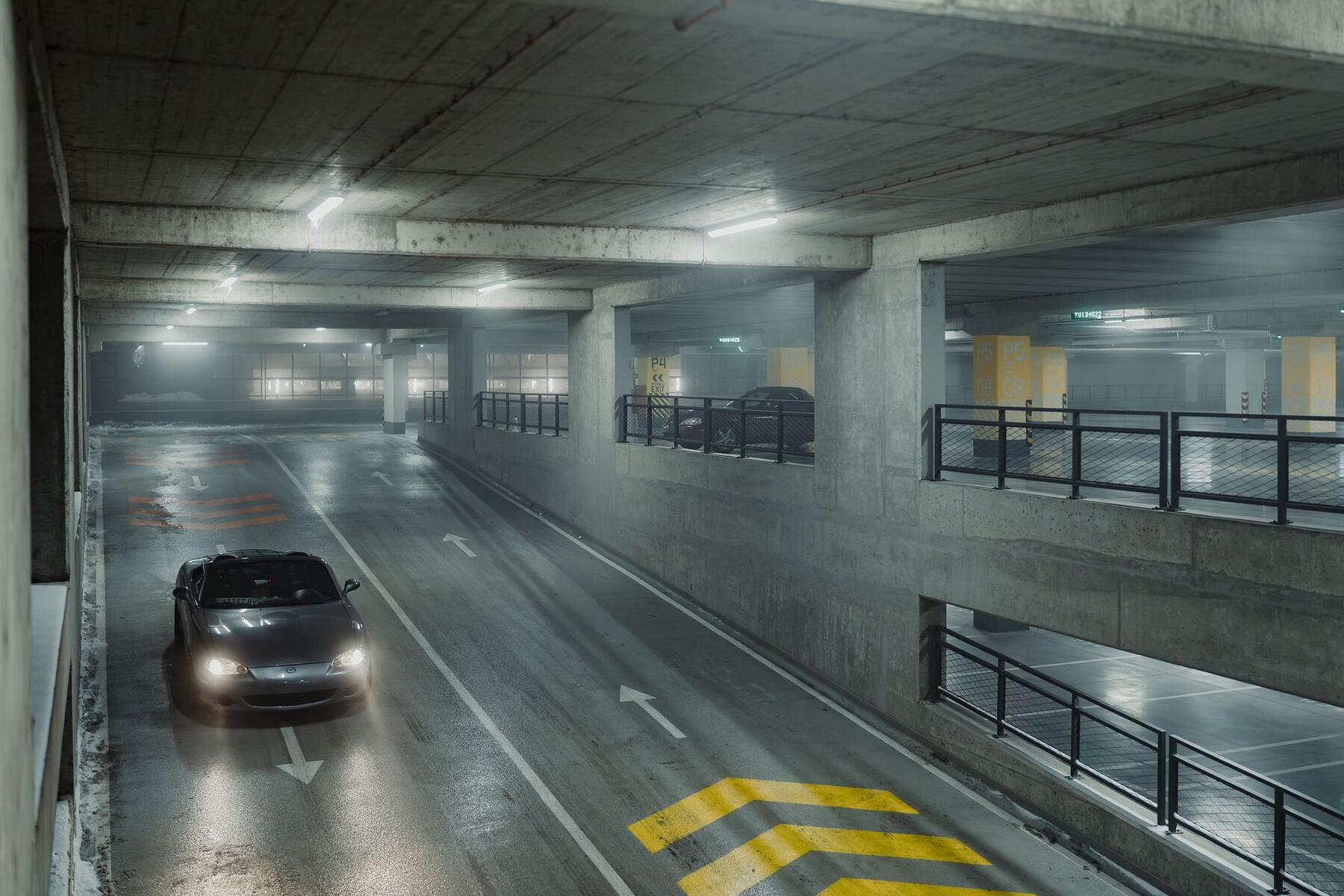
Parking Garage and Lot Patrol for Orlando Apartments
Officers working your decks and parking rows on irregular timing during the hours vehicles get opened, with a written round log going to your office. Nexus Security Firm staffs the post and a supervisor attends it.
What garage and lot patrol covers
A parking post is an officer working every level, aisle and row of your parking areas on a timing pattern nobody can predict from a bench across the street.
Each round walks the decks aisle by aisle, checks stairwells and elevator lobbies at every level, looks at the roof deck, and covers surface parking and any satellite lot. The officer records vehicles that do not belong, people sitting in parked cars, and doors and gates found propped or broken. Where a garage has a vehicle gate, the officer watches how it behaves and how many cars tailgate through on one credential. Burglaries in progress get an Orlando police call. Everything observed goes into a round log with times and levels, so your office can see the coverage and put a window around any camera pull.
- Level by level rounds of decks, aisles and stairwells
- Surface lots and satellite parking included in the round
- Vehicles and people that do not belong recorded with times
- Gate behavior and tailgating observed and reported
- Lighting, camera housing and door faults reported to maintenance
- A written round log delivered to your office
Which properties buy a parking post
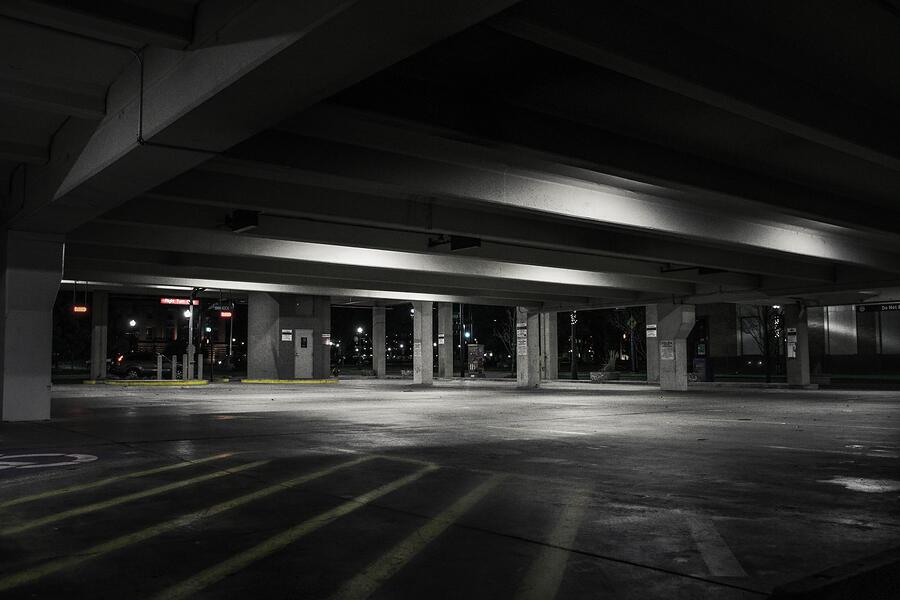
Parking patrol gets bought after a cluster, when a community has a run of vehicle burglaries or catalytic converter thefts and residents have started asking what the office is doing about it.
Mid-rise and wrap-style communities with structured parking are the common buyer, because a garage has levels, blind corners and stair access that a surface lot does not, and because residents feel the exposure walking to a car at night. Surface-parked garden communities buy it where the back rows sit against a fence line or a wooded edge with no light. Properties in lease-up buy it when construction fencing still leaves the garage open to anyone. Regional managers often start here because parking is where the losses are countable and the resident complaints are loudest.
What reduces vehicle crime, in order
Lighting first, then a presence that moves unpredictably, then access control, then cameras.
The consistent advice from people who manage residential property is to fix lighting before spending on anything else, and to get residents locking vehicles and clearing valuables out of sight. An officer on the deck is the next step, because a person walking the aisles at irregular intervals is the only measure on the list that can interrupt an event in progress. Cameras record it. They rarely stop it, and a recording of an incident nobody pursues deters nobody. Where we walk a property and find a dead light bank or a gate that has stopped closing, that finding goes to the owner as a repair item before we quote hours, because a lit deck with a working gate needs fewer of them.
How a parking post is staffed
Parking posts are unarmed at most communities and are usually an add-on to an overnight schedule instead of a standalone contract.
A garage is a small enough area that a dedicated officer for the whole night is often more coverage than the log justifies, so many communities run a patrol officer who spends a defined portion of each round in the garage. On large structured properties a dedicated deck officer makes sense during the hours the log shows. Florida Class D officers complete 40 hours of FDACS-approved training (FDACS Division of Licensing), and a supervisor is assigned to the post and attends it. Where a property has a history of armed incidents in the garage, an armed post is a conversation, and Florida requires a Class G license with 4 hours of firearms requalification each year of the two-year term.
What parking patrol costs in Orlando
A dedicated parking officer prices on the same Central Florida band as any other post, 24 to 34 dollars an hour unarmed and 32 to 46 armed, with the overnight hours at the top.
Florida officer wages run about 14 to 18 dollars an hour unarmed and 18 to 26 armed (ZipRecruiter, Salary.com and Indeed, 2026), and bill rates run 1.5 to 2 times the officer wage, with roughly 70 percent reaching the officer and about 10 percent indirect cost (Belfry Software, 2026). Where a community wants coverage without a standing post, a patrol vehicle making scheduled checks across the night is a lower-cost pattern, and route density drives that price: a company already covering several buildings near yours can offer a better number than one driving across the metro for a single stop.
What moves the rate:
- Overnight hours, which carry the premium on every post
- Whether the officer is dedicated to parking or splits a wider round
- Number of levels, ramps and separate lots in scope
- Whether a patrol vehicle is included
- Armed coverage where the risk justifies it
- How many nights a week the schedule runs
What Orlando parking decks deal with
Orlando garages carry traffic at hours most residential parking does not, because the metro works nights.
A city that drew 76.7 million visitors in 2025 (Visit Orlando) runs on hospitality, theme park and convention schedules, and residents on those shifts come home at one and two in the morning and leave again before dawn. Legitimate movement never stops, which is why a camera on its own struggles here and an officer who knows the cars is worth more. Structured parking near downtown and in the Mills and Colonial corridors also sits within walking distance of foot traffic that has nothing to do with the property. Summer heat keeps stairwells and shaded upper decks occupied. Hurricane season brings the other version of the problem: a garage with the power out has no gate and no lights, and communities that have agreed a storm coverage plan get officers from a schedule instead of joining a queue after the wind stops.
Verifying the license before you buy hours
Get the agency license number in writing and search it on the FDACS Division of Licensing public lookup.
Nexus Security Firm holds Florida Class B agency license B 1900066, and every officer on a deck holds a Class D license requiring 40 hours of FDACS-approved training, renewed every two years (FDACS Division of Licensing). Ask the same of any company quoting you a patrol, along with certificates of general liability and workers compensation naming the ownership entity. A vendor selling drive-by checks priced per visit should also tell you how long each check takes and what gets recorded, because a thirty second pass through a ramp is not a round.
Coverage that tends to go with this
Communities buying this coverage normally weigh these alongside it.
Starting a parking post
Four steps from a cluster of vehicle burglaries to documented rounds on the deck.
-
Bring the dates and levels
We want to know which levels and rows the vehicles were opened on and at what hours. Parking crime clusters tightly, and the cluster decides where the officer spends the shift.
-
Walk the deck after midnight
A supervisor walks every level at the hour in question. Dead lighting, stair doors that do not latch, a vehicle gate that stands open behind one car and blind corners with no sight line all surface on that walk.
-
Repairs first, then hours
Lighting and gate faults go to the owner as findings before the schedule is written, because a lit deck with a working gate needs fewer officer hours. You approve a written scope covering rounds, timing and what the officer records.
-
Officers on the deck, log to the office
Licensed officers work the rounds with a supervisor assigned and attending. Round times, levels and anything observed are documented and the documentation goes to your office.
Why this post changes the deck
-
Timing nobody can read
Rounds are deliberately irregular, because a patrol that enters the ramp at the same eleven minutes past every hour is a schedule anyone watching can work around. Officers vary the entry point, the direction and the interval, which is the difference between a presence and a pattern. Where the log shows the events clustering on two levels, most of the shift goes there.
Round times and levels are logged and the log goes to the client.
-
The repairs come before the hours
We walk the deck before quoting and hand back what we find, including dead lighting, stair doors that do not latch and gates standing open behind a single car. A property that fixes those needs fewer officer hours, and we would rather tell you that up front than sell you a schedule that covers a broken gate forever.
Bill rates run 1.5 to 2 times the officer wage (Belfry Software, 2026), so unnecessary hours are visible money.
-
Licensed and supervised on the overnight
We are a licensed Florida security agency, FDACS Class B agency license B 1900066, and the officers on your deck hold Class D licenses requiring 40 hours of FDACS-approved training (FDACS Division of Licensing). A supervisor is assigned and attends the post overnight, which is where industry turnover of 77 percent in 2024 (ASIS International) comes from when it goes unsupervised.
FDACS Class B agency license B 1900066.
What Reddit Says About Parking Garage Patrol in Orlando
Threads about residential parking crime keep landing on the same order of operations. Lighting comes first, then getting residents to lock vehicles and clear valuables from view, and only then the spending. Skepticism about cameras as reassurance is persistent, with one commercial property owner arguing that recordings deter nobody when almost nothing captured gets pursued.
On patrol itself, operators discuss per check pricing openly, from single digit drive-bys through to figures in the fifties for a substantial check, with three checks a night described as a competitive pattern. The point buyers make to each other is that route density sets the price: a company already covering nearby buildings can quote better than one making a special trip. They also warn that a drive-by is worth what it covers, and that a patrol only helps where it reaches. One contractor described a job box broken into while security was on the property, which is the same lesson a garage teaches when the officer never leaves the ground floor.
The other consistent warning is about buying a block of hours that does not overlap the incidents. A residential property contracted a short nightly window and was hit outside it. Ask any company you quote what a check covers, how long it takes, and what you receive in writing afterward.
A typical parking call from an Orlando community
The situation: A common call from a wrap-style mid-rise with four levels of structured parking. Nine vehicles opened over two months, all on the upper two levels, mostly between two and four in the morning, plus two catalytic converter thefts. Residents are posting about it, and the office has a stack of police report numbers and no pattern beyond the level numbers.
What gets done: A supervisor walks the deck at two thirty in the morning. Half the light fixtures on level three are out, the stair door from the ramp does not latch, and the vehicle gate stays open long enough for three cars to follow one credential. Lighting and gate repairs go back to the owner first. Coverage starts Wednesday through Sunday from midnight to five, unarmed, with the officer spending the majority of each round on levels three and four and the balance on the ground floor and the surface overflow. Post orders cover recording vehicles that do not belong and calling Orlando police on anything in progress.
How it turns out: Round logs with times and levels reach the office each morning. The gate repair alone cuts the tailgating, and the lit deck with someone walking it removes the conditions the cluster depended on. When a vehicle is opened again, the office has a round log that narrows the camera pull to a defined window instead of a night. Once the log runs quiet on the last hour of the shift, that hour comes off.
Parking garage and lot patrol questions
What managers ask when the garage is the problem.